
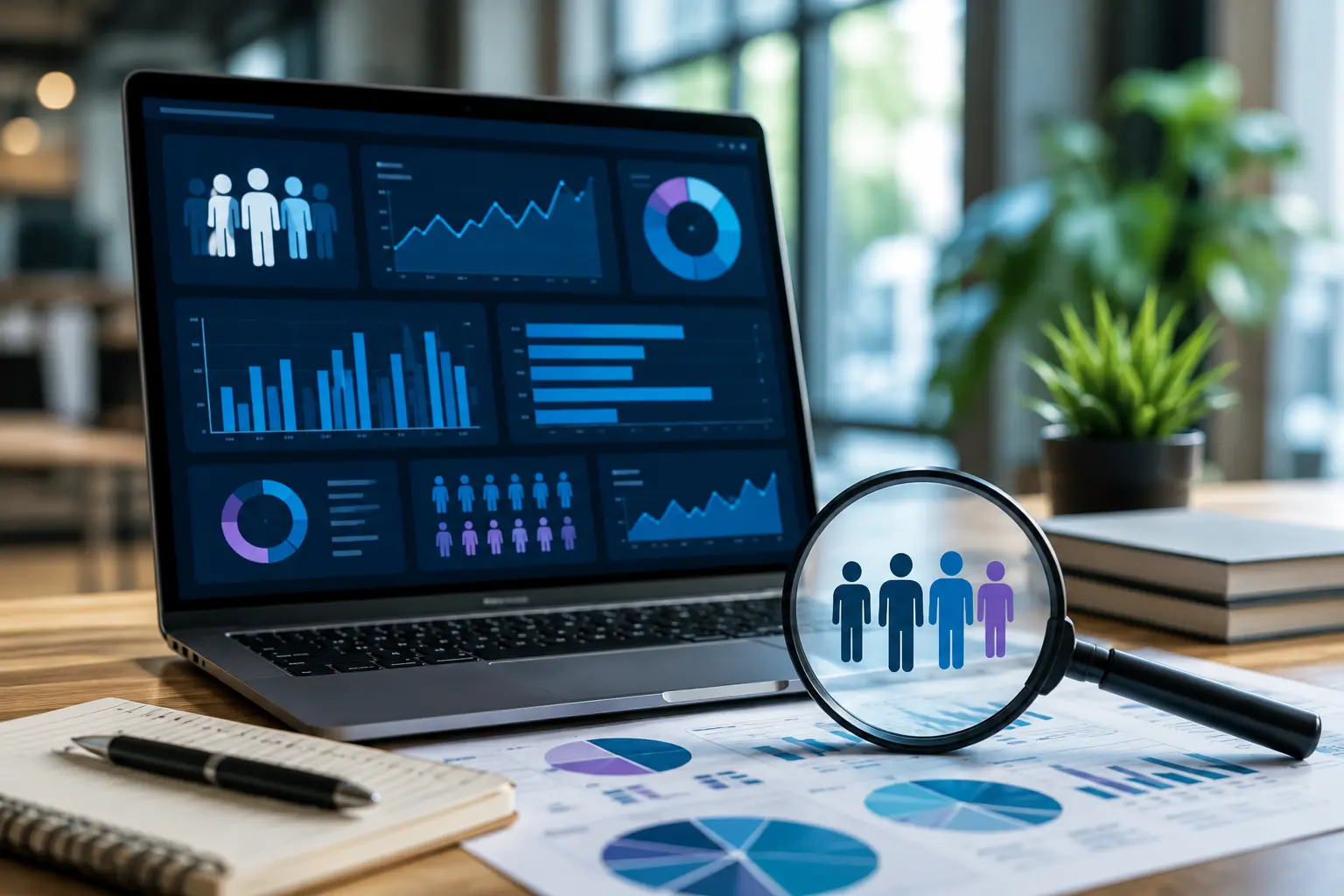
Every business generates valuable workforce data every day, from employee attendance and performance reviews to recruitment records and training progress. While many organizations collect this information, only a small percentage use it strategically. Workforce analytics transforms this raw data into meaningful insights that help companies make better decisions, improve productivity, and achieve long-term business goals.
Modern organizations operate in a rapidly changing environment where workforce expectations, technology, and market demands continue to evolve. Making decisions based solely on experience or assumptions is no longer enough. Businesses now require measurable evidence to understand employee performance, identify operational challenges, and plan for future workforce needs. Workforce analytics provides that evidence by connecting people data with business outcomes.
Instead of viewing human resources as a support function, companies increasingly recognize it as a strategic partner that contributes directly to organizational growth. Workforce analytics plays a vital role in this transformation by helping leaders understand how workforce decisions influence revenue, customer satisfaction, efficiency, and overall business performance.
Understanding Workforce Analytics
Workforce analytics is the practice of collecting, organizing, and evaluating employee-related information to improve business decision-making. It involves examining workforce trends, identifying patterns, measuring performance, and using analytical tools to solve organizational challenges.
Unlike traditional HR reporting, which primarily focuses on historical records, workforce analytics explores the reasons behind workplace trends. It enables organizations to understand what is happening, why it is happening, what is likely to happen in the future, and which actions will produce the best results.
Businesses gather workforce data from multiple systems, including payroll software, attendance records, recruitment platforms, performance management systems, employee surveys, and learning management applications. When these datasets are combined, organizations gain a comprehensive understanding of their workforce and its contribution to business success.
Why Workforce Analytics Has Become Essential
Today’s business environment is more competitive than ever. Organizations must control costs while attracting skilled professionals, retaining top performers, and maintaining high levels of productivity. Every workforce decision has financial consequences, making accurate data essential for effective planning.
Workforce analytics helps business leaders replace assumptions with evidence. Instead of reacting after problems occur, organizations can identify warning signs early and develop proactive solutions. This leads to faster decision-making, better resource allocation, and stronger business performance.
The ability to understand workforce behavior also enables companies to adapt quickly to market changes, changing customer demands, and evolving employee expectations.
Improving Recruitment Through Data
Hiring the right employees is one of the most important investments any organization makes. A poor hiring decision can increase recruitment costs, reduce productivity, and affect team performance for months or even years.
Workforce analytics helps recruiters evaluate which hiring sources consistently produce successful employees. It also measures recruitment efficiency by analyzing application quality, interview performance, hiring timelines, onboarding success, and long-term employee retention.
These insights allow organizations to improve recruitment strategies, reduce hiring costs, shorten recruitment cycles, and attract candidates who are better aligned with business objectives.
Over time, data-driven recruitment creates stronger teams and contributes directly to organizational growth.
Strengthening Employee Retention
Retaining experienced employees is often more cost-effective than constantly recruiting new talent. High employee turnover not only increases hiring expenses but also affects productivity, customer relationships, and organizational knowledge.
Workforce analytics enables organizations to recognize patterns that commonly appear before employees leave. Factors such as declining engagement, increased absenteeism, limited career growth, excessive workloads, or reduced performance may indicate a higher risk of turnover.
With these insights, businesses can introduce targeted retention initiatives, improve communication, expand development opportunities, and create a better employee experience before valuable talent decides to leave.
Enhancing Employee Performance
Employee performance directly influences business success. Workforce analytics allows managers to understand which factors contribute to high performance and where improvements are needed.
Rather than evaluating employees only during annual reviews, organizations can continuously monitor key performance indicators, project outcomes, collaboration levels, skill development, and productivity trends.
This continuous flow of information enables managers to provide timely support, recognize achievements, and remove obstacles that prevent employees from performing at their best.
Employees also benefit because they receive clearer feedback, personalized development opportunities, and fairer performance evaluations based on measurable outcomes.
Better Workforce Planning for Future Growth
Successful organizations prepare for future workforce needs rather than responding only when shortages occur. Workforce analytics supports strategic planning by forecasting staffing requirements based on business expansion, retirement trends, employee turnover, and future skill demands.
These forecasts help organizations determine when to recruit new employees, invest in training existing staff, or restructure teams to improve efficiency.
Accurate workforce planning reduces unnecessary hiring costs while ensuring the organization has the talent needed to support future business objectives.
Measuring Employee Engagement
Employee engagement is closely connected to productivity, innovation, customer service, and retention. Engaged employees are generally more motivated, collaborate effectively, and contribute positively to organizational culture.
Workforce analytics combines survey results, attendance records, productivity data, feedback, and communication trends to measure employee engagement across departments.
This information helps leadership identify teams requiring additional support and evaluate whether workplace initiatives are improving employee satisfaction over time.
Organizations that actively monitor engagement often create healthier work environments that encourage long-term commitment and stronger performance.
Optimizing Learning and Development
Training programs require significant investments of time and money. Without proper measurement, businesses cannot determine whether these programs actually improve employee capabilities.
Workforce analytics evaluates learning outcomes by comparing employee performance before and after training. It measures skill improvement, productivity changes, promotion rates, certification completion, and overall business impact.
These insights help organizations design more effective learning strategies that address genuine skill gaps while maximizing returns on training investments.
Workforce Analytics and Business Productivity
Business productivity depends on having the right employees performing the right tasks efficiently. Workforce analytics provides visibility into workload distribution, project completion, operational efficiency, and resource utilization.
Managers can identify departments experiencing excessive workloads, detect inefficiencies within business processes, and optimize workforce allocation based on actual performance data.
As operational decisions become more data-driven, organizations improve productivity while reducing unnecessary costs and minimizing employee burnout.
The Growing Role of Artificial Intelligence
Artificial intelligence has expanded the capabilities of workforce analytics by making data analysis faster and more accurate. AI-powered systems can analyze thousands of workforce records within minutes, identify hidden trends, and generate predictive insights that would be difficult to discover manually.
Businesses increasingly use artificial intelligence to predict employee turnover, identify future skill shortages, optimize staffing schedules, and recommend personalized learning opportunities.
Although AI significantly improves analytical capabilities, human judgment remains essential for interpreting insights, making ethical decisions, and maintaining fairness across the organization.
Common Challenges When Implementing Workforce Analytics
While workforce analytics offers substantial benefits, successful implementation requires careful planning and strong data management practices.
Many organizations struggle with disconnected software systems, inconsistent data quality, outdated reporting processes, and limited analytical expertise. Employee privacy is another important consideration, requiring businesses to establish transparent policies for collecting, storing, and using workforce information responsibly.
Organizations that invest in reliable technology, maintain accurate data, and encourage collaboration between HR and business leaders are more likely to achieve successful workforce analytics initiatives.
Best Practices for Successful Workforce Analytics
Building an effective workforce analytics strategy begins with defining clear business objectives. Organizations should identify the problems they want to solve before deciding which workforce metrics to monitor.
Reliable data collection, system integration, regular reporting, and continuous performance reviews create a strong analytical foundation. Equally important is developing analytical skills within HR teams so that workforce insights can support strategic business decisions rather than simply generating reports.
Maintaining transparency with employees about how workforce data is collected and used also helps build trust while ensuring compliance with privacy regulations.
The Future of Workforce Analytics
As businesses continue embracing digital transformation, workforce analytics will become even more sophisticated. Predictive analytics, artificial intelligence, automation, and real-time reporting are enabling organizations to anticipate workforce challenges instead of simply reacting to them.
Future workforce strategies will increasingly focus on skills-based hiring, personalized employee experiences, predictive workforce planning, and intelligent decision support systems.
Organizations that integrate workforce analytics into everyday decision-making will be better prepared to adapt to changing business conditions while maintaining a productive, engaged, and future-ready workforce.
Conclusion
Workforce analytics has become an essential business capability rather than simply an HR reporting tool. By converting workforce data into practical insights, organizations can improve recruitment, strengthen employee retention, increase productivity, optimize workforce planning, and support sustainable business growth.
Companies that embrace data-driven workforce management gain a competitive advantage because they make informed decisions based on measurable evidence rather than assumptions. As technology continues to evolve, workforce analytics will play an even greater role in helping organizations build resilient teams, improve operational efficiency, and achieve long-term business success.
Recent Posts
- Time and Attendance Software: Complete Guide for Employers
- Time and Attendance: What’s the Difference Between the Two?
- How to Reduce Timesheet Errors and Improve Payroll Accuracy
- Timesheet App for Employees: Features, Benefits & Best Practices

- Timesheet Software vs. Excel: Which Is Better for Businesses?
Stay Ahead. Simplify Workforce Management.
Empower your teams to work efficiently with a unified workforce platform built for clarity, control, and actionable insights across your organization.