
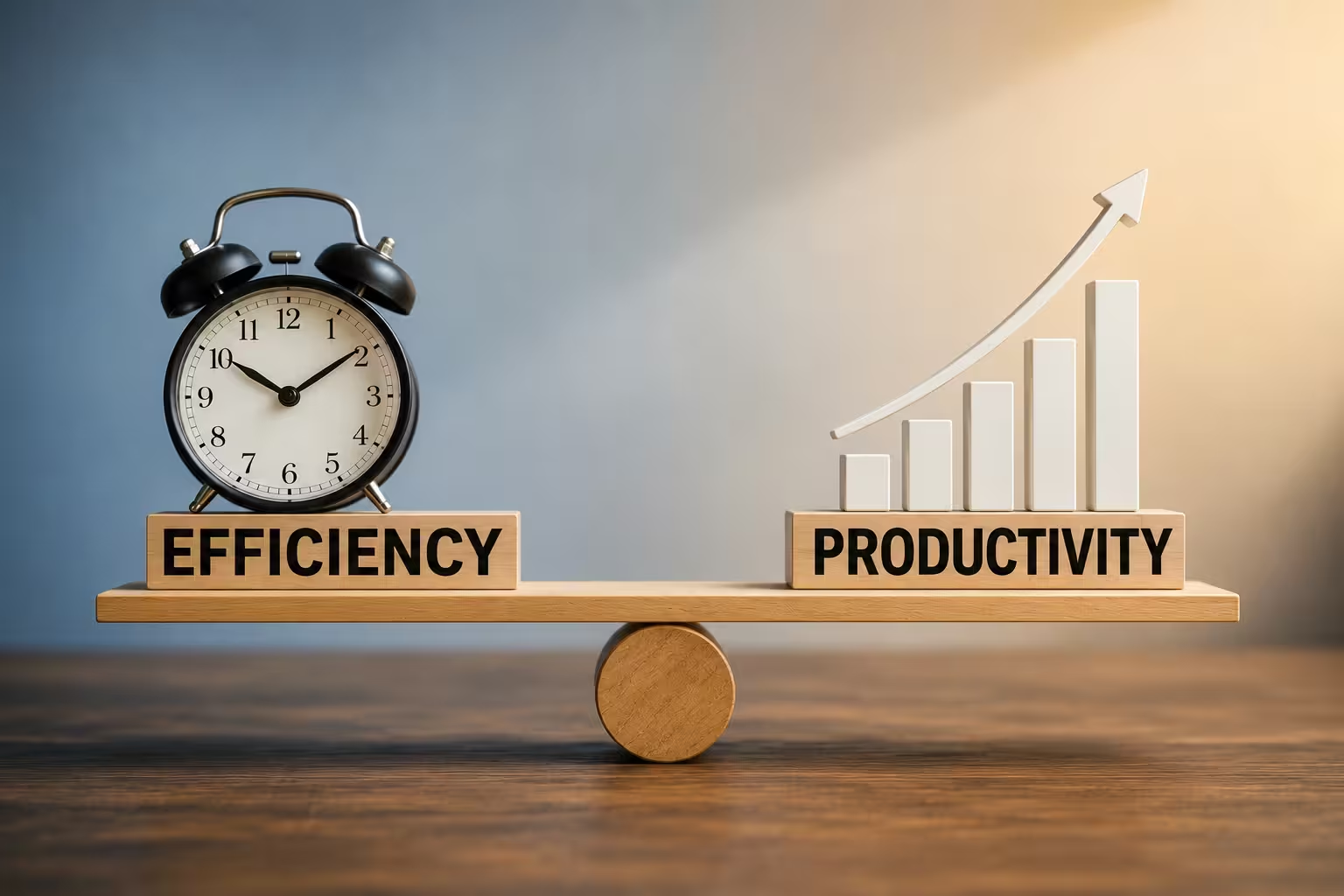
In today’s competitive business environment, managers are constantly looking for ways to improve team performance, reduce operational waste, and achieve better business outcomes. During these discussions, two terms often appear together: productivity and efficiency.
Although many people use these terms interchangeably, productivity and efficiency are not the same. Understanding the difference is critical for managers who want to build high-performing teams, improve workforce operations, and make better business decisions.
A team can be highly productive but inefficient. Likewise, a team can operate efficiently while producing less overall output than expected. The most successful organizations focus on improving both productivity and efficiency to maximize performance and achieve sustainable growth.
In this guide, we’ll explore the key differences between productivity and efficiency, why both matter, how managers can measure them, and practical strategies to improve workplace performance.
What Is Productivity?
Productivity refers to the amount of work completed within a specific period of time. It measures output and focuses on how much work is produced.
In simple terms, productivity answers the question:
“How much work is being done?”
For example, if a customer support team handles 500 support tickets in a week, productivity can be measured by the total number of tickets completed.
Similarly, a sales team’s productivity may be measured by:
- Number of calls made
- Deals closed
- Revenue generated
- New customers acquired
The more output produced within a given period, the higher the productivity level.
Businesses often focus heavily on productivity because it directly impacts revenue, growth, and operational performance.
What Is Efficiency?
Efficiency focuses on how resources are used to produce results. Rather than measuring total output alone, efficiency examines whether work is completed using the least amount of time, effort, and resources possible.
Efficiency answers the question:
“How well is the work being done?”
For example, imagine two employees complete the same task.
- Employee A completes the task in 2 hours.
- Employee B completes the same task in 1 hour.
Both employees are productive because they completed the work. However, Employee B is more efficient because they achieved the same result using fewer resources.
Efficiency helps businesses reduce costs, improve processes, and maximize workforce performance.
Also read : Employee Productivity Roadblocks: Common Causes and How to Fix Them (2026 Guide)
Why Managers Often Confuse Productivity and Efficiency
Many organizations mistakenly assume that high productivity automatically means high efficiency.
This is not always true.
A team may produce large amounts of work while wasting time, duplicating efforts, or using inefficient processes.
For example:
A warehouse team processes 1,000 orders per day but requires excessive overtime and manual corrections.
The team appears productive because output is high. However, operational efficiency is poor because resources are being used inefficiently.
On the other hand, a team may operate very efficiently but produce insufficient output to meet business goals.
The most successful organizations focus on balancing both productivity and efficiency rather than prioritizing one over the other.
Productivity vs. Efficiency: The Core Difference
The simplest way to understand the difference is:
Productivity measures output.
Efficiency measures resource utilization.
Productivity focuses on quantity, while efficiency focuses on quality and process optimization.
A business that only measures productivity may overlook hidden operational issues.
A business that only measures efficiency may miss opportunities for growth and increased output.
Managers must evaluate both metrics together to gain a complete picture of workforce performance.
Why Both Productivity and Efficiency Matter
Organizations that improve both productivity and efficiency gain significant competitive advantages.
When productivity improves:
- More work gets completed
- Revenue opportunities increase
- Teams achieve goals faster
When efficiency improves:
- Costs decrease
- Resources are utilized better
- Employee workloads become more manageable
Together, productivity and efficiency contribute to:
- Higher profitability
- Better customer service
- Improved employee satisfaction
- Stronger operational performance
Companies that focus solely on increasing output often experience burnout, turnover, and process inefficiencies.
Similarly, organizations that focus only on efficiency may struggle to grow because overall output remains limited.
Examples of Productivity vs. Efficiency in the Workplace
Understanding the distinction becomes easier when viewed through real workplace scenarios.
Example 1: Customer Support Team
A support team closes 800 tickets per week.
This indicates strong productivity.
However, if agents repeatedly transfer tickets, spend excessive time searching for information, or require multiple follow-ups, efficiency may be low.
The team is producing results, but the process is not optimized.
Example 2: Manufacturing Operations
A factory produces 5,000 units per day.
This demonstrates productivity.
However, if production involves excessive material waste, equipment downtime, or overtime labor, operational efficiency may be suffering.
Managers should evaluate both output and resource utilization.
Example 3: Remote Workforce Management
A remote employee completes all assigned tasks on schedule.
Productivity appears strong.
However, if they spend significant time switching between disconnected systems or manually updating reports, efficiency may be reduced.
This is where workforce management software can significantly improve operations.
Also read : 10 Proven Ways to Improve Work Efficiency in the Workplace (2026 Guide)
How Managers Measure Productivity
Productivity metrics vary depending on industry and job function.
Common productivity measurements include:
- Tasks completed
- Sales generated
- Projects delivered
- Support tickets resolved
- Revenue per employee
- Production volume
These metrics help managers understand workforce output and business performance.
However, productivity data alone rarely tells the full story.
Managers must also understand how resources are being used to achieve those results.
How Managers Measure Efficiency
Efficiency metrics focus on performance quality and resource utilization.
Examples include:
- Time required to complete tasks
- Cost per project
- Overtime hours
- Error rates
- Resource consumption
- Workflow completion time
Efficiency measurements help identify process bottlenecks and operational waste.
Organizations that regularly monitor efficiency can improve performance while reducing costs.
Common Factors That Reduce Productivity
Several workplace issues can negatively impact productivity.
These include:
- Poor communication
- Unclear priorities
- Frequent interruptions
- Inadequate training
- Lack of accountability
- Outdated systems
When employees spend too much time resolving operational problems, overall output declines.
Managers should regularly review workflows and identify barriers that prevent employees from performing at their best.
Common Factors That Reduce Efficiency
Efficiency problems often stem from process-related challenges rather than employee performance.
Common causes include:
- Manual workflows
- Duplicate work
- Scheduling conflicts
- Poor workforce visibility
- Excessive meetings
- Outdated technology
Even highly productive employees can become inefficient if business processes are poorly designed.
Improving efficiency often requires operational improvements rather than increased employee effort.
How Workforce Management Software Improves Both
Modern workforce management software helps businesses improve productivity and efficiency simultaneously.
Organizations can use workforce management tools to:
- Track employee attendance
- Manage schedules
- Monitor work hours
- Improve workforce visibility
- Reduce manual administrative work
- Generate performance reports
When managers have access to accurate workforce data, they can identify performance trends, reduce bottlenecks, and make better operational decisions.
Office1Solution helps businesses simplify workforce operations through employee scheduling, attendance tracking, timesheet management, workforce reporting, and operational visibility tools designed for modern organizations.
By centralizing workforce data, businesses can improve both employee productivity and operational efficiency.
Strategies to Improve Productivity
Managers can improve productivity by focusing on output-oriented improvements.
Effective strategies include:
- Setting clear goals
- Improving communication
- Providing employee training
- Eliminating distractions
- Using performance metrics
- Establishing accountability
Employees perform better when expectations are clear and progress is regularly monitored.
Strategies to Improve Efficiency
Improving efficiency often requires process optimization.
Organizations can increase efficiency by:
- Automating repetitive tasks
- Simplifying workflows
- Reducing manual data entry
- Improving scheduling processes
- Centralizing workforce information
- Using workforce management technology
Efficiency improvements help organizations achieve more while using fewer resources.
The Best Approach: Focus on Both
Many businesses make the mistake of prioritizing one metric over the other.
The most successful organizations focus on:
- Increasing output
- Improving processes
- Reducing waste
- Supporting employees
When productivity and efficiency improve together, organizations experience stronger performance, better employee satisfaction, and increased profitability.
Managers should regularly review both metrics when evaluating workforce performance.
Frequently Asked Questions
What is the difference between productivity and efficiency?
Productivity measures how much work is completed, while efficiency measures how effectively resources are used to complete that work.
Can a team be productive but inefficient?
Yes. A team may produce significant output while wasting time, resources, or effort.
Which is more important: productivity or efficiency?
Both are important. Productivity drives output, while efficiency ensures resources are used effectively.
How can managers improve workplace efficiency?
Managers can improve efficiency through process optimization, automation, workforce visibility, and better scheduling practices.
How does workforce management software help?
Workforce management software improves attendance tracking, scheduling, reporting, productivity monitoring, and workforce visibility, helping businesses improve both productivity and efficiency.
Final Thoughts
Productivity and efficiency are closely related, but they measure different aspects of workplace performance. Productivity focuses on how much work gets done, while efficiency focuses on how well resources are used to achieve those results.
Managers who understand this distinction are better equipped to make informed decisions, improve workforce performance, and create more effective business operations.
As organizations continue managing remote teams, flexible work arrangements, and growing workforce demands, investing in workforce management technology can help improve both productivity and efficiency while supporting long-term business success.
Recent Posts
- Time and Attendance Software: Complete Guide for Employers

- Time and Attendance: What’s the Difference Between the Two?

- How to Reduce Timesheet Errors and Improve Payroll Accuracy

- Timesheet App for Employees: Features, Benefits & Best Practices

- Timesheet Software vs. Excel: Which Is Better for Businesses?
Stay Ahead. Simplify Workforce Management.
Empower your teams to work efficiently with a unified workforce platform built for clarity, control, and actionable insights across your organization.