

Building a high-performing team requires more than assigning tasks and monitoring results. Effective leadership creates an environment where employees feel trusted, motivated, and empowered to contribute their best work. However, many managers unintentionally fall into the trap of micromanagement, believing that close supervision will improve productivity and reduce mistakes.
While micromanagement may provide short-term control, it often damages employee morale, reduces engagement, and limits team growth. Strong leadership, on the other hand, focuses on guidance, communication, accountability, and trust. Leaders help employees succeed by providing direction while allowing them the autonomy to perform their responsibilities effectively.
Understanding the difference between micromanagement and leadership is essential for managers who want to improve team performance, retain top talent, and create a positive workplace culture.
In this guide, we’ll explore the key differences between micromanagement and leadership, the impact each management style has on employees, and practical strategies for building high-performing teams.
What Is Micromanagement?
Micromanagement occurs when managers excessively control or closely monitor every aspect of an employee’s work. Instead of focusing on outcomes, micromanagers often become involved in minor details, daily decisions, and routine tasks that employees should be trusted to handle independently.
Micromanagers frequently:
- Constantly check employee progress
- Require frequent updates
- Control small decisions
- Avoid delegating responsibilities
- Closely monitor work hours and activities
- Focus on processes rather than results
Although these behaviors are usually intended to improve performance, they often create the opposite effect.
Employees who feel constantly monitored may become less confident, less creative, and less engaged in their work.
What Is Leadership?
Leadership focuses on inspiring, guiding, and empowering employees to achieve goals while supporting their professional development.
Effective leaders establish clear expectations and provide resources, support, and feedback without controlling every detail of the work process.
Strong leaders:
- Set clear goals
- Build trust
- Encourage collaboration
- Develop employee skills
- Delegate responsibilities
- Focus on outcomes and accountability
Rather than managing every step, leaders create systems and environments where employees can succeed independently.
Leadership encourages ownership and accountability while helping teams remain aligned with organizational goals.
Why Managers Become Micromanagers
Most managers do not intentionally choose to micromanage.
Micromanagement often develops because of:
Also read : People Leader vs. Manager: Essential Leadership Skills for Modern Workplaces (2026 Guide)
- Fear of mistakes
- Lack of trust
- Pressure to meet deadlines
- Inexperience in leadership roles
- Poor communication systems
- Limited workforce visibility
When managers feel uncertain about team performance, they may attempt to regain control by becoming overly involved in daily activities.
Unfortunately, this approach rarely solves the underlying issue and often creates additional challenges.
In many cases, better communication, clearer expectations, and improved workforce visibility can eliminate the need for excessive supervision.
The Hidden Cost of Micromanagement
Micromanagement affects more than employee satisfaction. It can have a significant impact on productivity, retention, and organizational performance.
When employees feel they are constantly being monitored, they often become hesitant to make decisions or take initiative.
This can lead to:
- Reduced productivity
- Lower employee morale
- Increased stress
- Higher turnover rates
- Limited innovation
- Delayed decision-making
Employees may begin focusing more on avoiding mistakes than on achieving meaningful results.
Over time, this creates a workplace culture where individuals rely heavily on management approval rather than exercising their own judgment and expertise.
How Leadership Improves Team Performance
Leadership creates an environment where employees feel trusted and supported.
When employees understand expectations and have the resources needed to succeed, they are more likely to:
- Take ownership of their work
- Solve problems independently
- Collaborate effectively
- Develop new skills
- Contribute innovative ideas
Leaders focus on removing obstacles rather than controlling every action.
This approach helps teams become more adaptable, productive, and engaged.
Organizations with strong leadership cultures often experience:
- Higher employee retention
- Better customer satisfaction
- Improved productivity
- Stronger workplace relationships
Leadership creates long-term success by developing people rather than simply managing tasks.
Key Differences Between Micromanagement and Leadership
Although both management styles involve guiding employees, their approaches are fundamentally different.
Focus on Control vs. Trust
Micromanagement relies heavily on control. Managers closely supervise employees because they feel direct oversight is necessary for success.
Leadership is built on trust. Leaders provide direction and accountability while allowing employees the freedom to perform their work independently.
Trust encourages confidence and helps employees grow professionally.
Process vs. Outcomes
Micromanagers often focus on how work is completed.
They may dictate specific methods, require constant updates, and monitor minor details.
Leaders focus on outcomes.
Rather than controlling every step, they establish expectations and measure success based on results.
This approach encourages employees to think critically and develop their own solutions.
Dependency vs. Empowerment
Micromanagement often creates dependency.
Employees become reluctant to make decisions without approval because they fear criticism or mistakes.
Leadership promotes empowerment.
Employees are encouraged to take initiative, solve problems, and contribute ideas.
Empowered employees generally demonstrate higher levels of engagement and productivity.
Short-Term Control vs. Long-Term Growth
Micromanagement may provide temporary control, but it rarely supports long-term team development.
Leadership focuses on helping employees build skills and confidence over time.
Organizations that prioritize leadership create stronger teams capable of handling greater responsibility and complexity.
Signs You Might Be Micromanaging
Many managers are unaware that their behaviors may be perceived as micromanagement.
Common warning signs include:
- Frequently asking for status updates
- Struggling to delegate tasks
- Reviewing every minor decision
- Correcting work unnecessarily
- Requiring approval for routine activities
- Feeling uncomfortable when employees work independently
Recognizing these behaviors is the first step toward becoming a more effective leader.
Also read : 50 Best Performance Review Questions for Employees & Managers (2026 Guide)
Why Employees Prefer Leadership Over Micromanagement
Employees want guidance, support, and clear expectations, but they also want autonomy.
When employees feel trusted, they are more likely to:
- Take ownership of responsibilities
- Develop confidence
- Improve performance
- Remain engaged
- Stay with the organization longer
Micromanagement often signals a lack of trust, which can damage relationships and reduce employee motivation.
Leadership builds stronger workplace cultures where employees feel respected and valued.
How to Transition From Micromanagement to Leadership
Managers who recognize micromanagement tendencies can take steps to develop stronger leadership skills.
The goal is not to reduce accountability but to create a healthier balance between oversight and autonomy.
Set Clear Expectations
Many micromanagement issues begin because expectations are unclear.
Employees should understand:
- Their responsibilities
- Performance goals
- Deadlines
- Reporting requirements
When expectations are clearly communicated, managers can focus on results rather than constantly checking progress.
Delegate Effectively
Delegation is one of the most important leadership skills.
Managers should assign responsibilities while giving employees the authority needed to complete their work.
Effective delegation:
- Builds trust
- Improves efficiency
- Develops employee skills
- Reduces management workload
Successful leaders understand that delegation is essential for team growth.
Focus on Outcomes
Rather than monitoring every task, leaders should evaluate overall performance and results.
This allows employees to determine the best approach while remaining accountable for outcomes.
Outcome-focused management encourages innovation and problem-solving.
Improve Communication
Regular communication helps managers stay informed without becoming overly involved.
Scheduled check-ins provide opportunities to:
- Review progress
- Address challenges
- Offer support
- Align priorities
Open communication reduces uncertainty and builds stronger relationships.
Use Data Instead of Assumptions
Many managers micromanage because they lack visibility into workforce performance.
Modern workforce management software provides real-time insights into:
- Attendance
- Scheduling
- Productivity
- Work hours
- Team performance
Access to reliable data helps managers make informed decisions without relying on excessive supervision.
How Workforce Management Software Supports Better Leadership
Technology plays an increasingly important role in helping managers lead effectively.
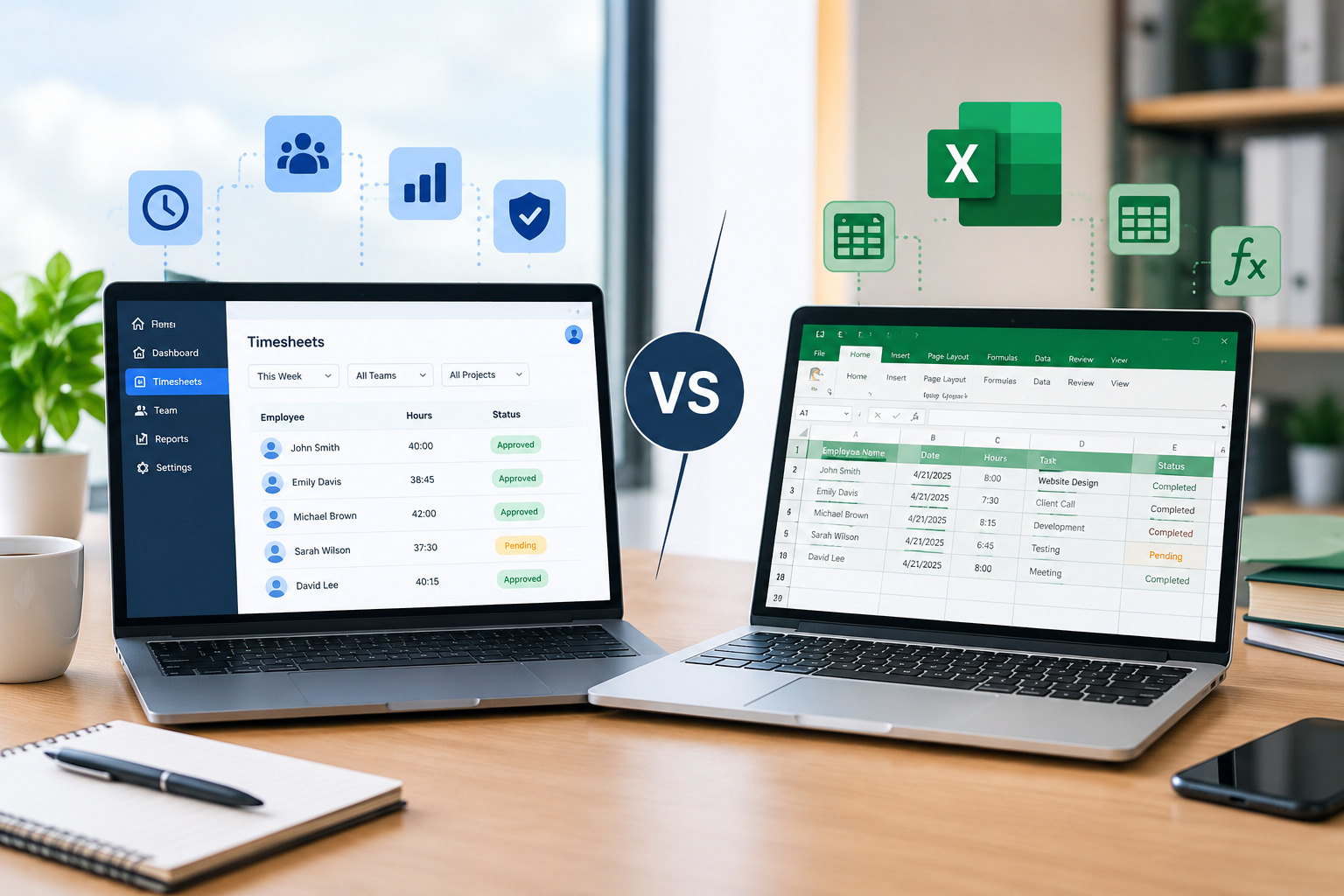
Workforce management software provides visibility into workforce operations while reducing the need for constant monitoring.
Organizations can:
- Track attendance
- Manage schedules
- Monitor workloads
- Review productivity trends
- Generate workforce reports
This visibility allows managers to focus on coaching and leadership rather than administrative oversight.
Office1Solution helps businesses improve workforce management through employee scheduling, attendance tracking, timesheet management, reporting, and workforce visibility tools designed for modern teams.
By centralizing workforce data, organizations can support stronger leadership and reduce the need for micromanagement.
Building High-Performing Teams Through Leadership
High-performing teams thrive in environments where trust, accountability, and communication are prioritized.
Employees perform at their best when they:
- Understand expectations
- Have the tools needed to succeed
- Feel trusted by leadership
- Receive constructive feedback
- Have opportunities to grow
Leadership creates these conditions by focusing on development rather than control.
Organizations that invest in leadership development often experience stronger performance, higher retention, and improved workplace culture.
Frequently Asked Questions
What is the difference between micromanagement and leadership?
Micromanagement focuses on controlling employee activities, while leadership focuses on guiding and empowering employees to achieve results.
Why is micromanagement harmful?
Micromanagement can reduce morale, limit innovation, increase stress, and create dependency on management approval.
Can micromanagement affect productivity?
Yes. Employees who feel excessively monitored often become less engaged and less productive over time.
How can managers avoid micromanaging?
Managers can avoid micromanagement by setting clear expectations, delegating effectively, focusing on outcomes, and improving communication.
How does workforce management software help leaders?
Workforce management software provides visibility into workforce performance, helping leaders make informed decisions without excessive oversight.
Final Thoughts
Micromanagement and leadership may appear similar on the surface, but their impact on employees and organizations is dramatically different. Micromanagement creates control and dependency, while leadership builds trust, accountability, and growth.
Managers who focus on leadership rather than excessive supervision create stronger teams, improve employee engagement, and support long-term business success. By combining clear communication, effective delegation, workforce visibility, and modern management tools, organizations can build high-performing teams that thrive in today’s dynamic work environment.
Recent Posts
- Time and Attendance Software: Complete Guide for Employers

- Time and Attendance: What’s the Difference Between the Two?

- How to Reduce Timesheet Errors and Improve Payroll Accuracy

- Timesheet App for Employees: Features, Benefits & Best Practices

- Timesheet Software vs. Excel: Which Is Better for Businesses?
Stay Ahead. Simplify Workforce Management.
Empower your teams to work efficiently with a unified workforce platform built for clarity, control, and actionable insights across your organization.