

In today’s business environment, accurate employee time tracking is essential for workforce management, payroll processing, productivity monitoring, and operational efficiency. Whether a business manages office employees, remote teams, field workers, or shift-based staff, understanding how employees spend their working hours is critical for making informed business decisions.
This is where timesheets play an important role.
A timesheet is one of the most fundamental workforce management tools used by organizations worldwide. It helps employers track employee work hours, monitor attendance, calculate payroll, manage projects, and improve workforce visibility.
While traditional paper timesheets have largely been replaced by digital solutions, the concept remains the same: recording employee working time accurately and consistently.
In this guide, we’ll explore what a timesheet is, why businesses use timesheets, different types of timesheets, benefits for employers, common challenges, and how modern timesheet software helps organizations manage their workforce more effectively.
What Is a Timesheet?
A timesheet is a record that tracks the amount of time an employee spends working during a specific period.
Timesheets typically capture:
- Clock-in times
- Clock-out times
- Total hours worked
- Break durations
- Overtime hours
- Project or task time
The primary purpose of a timesheet is to document employee working hours accurately.
Employers use timesheet data for a variety of operational functions, including payroll processing, attendance tracking, labor cost management, project billing, and workforce planning.
Although the format may vary, the goal remains the same: providing a reliable record of employee work activity.
Why Timesheets Are Important
For many organizations, employees represent the largest operational expense. Without accurate time tracking, businesses may struggle to understand labor costs, workforce productivity, and resource utilization.
Timesheets provide valuable workforce data that helps organizations:
- Process payroll accurately
- Track employee attendance
- Monitor overtime
- Improve project management
- Support compliance requirements
- Analyze workforce productivity
By maintaining accurate records of employee work hours, businesses gain better visibility into workforce operations and can make more informed decisions.
Also Read : Excel Employee Schedule vs. Scheduling Software: Which Is Better for Growing Businesses?
The Evolution of Timesheets
Timesheets have existed for decades.
Historically, employees recorded work hours manually using paper forms or punch cards.
Managers then reviewed these records before submitting them for payroll processing.
While this approach worked, it often created several challenges:
- Human error
- Lost records
- Payroll inaccuracies
- Administrative workload
- Limited workforce visibility
As businesses adopted digital technologies, timesheets evolved into electronic systems that automate time tracking and reporting.
Today’s organizations increasingly use cloud-based timesheet software that provides real-time workforce visibility and simplifies administrative tasks.
How Timesheets Work
A timesheet records the amount of time employees spend performing work-related activities.
Employees typically log:
- Start times
- End times
- Break periods
- Project hours
- Task-specific work
Managers then review and approve timesheets before the data is used for payroll, reporting, or project analysis.
Modern timesheet systems often automate much of this process through:
- Mobile apps
- Online portals
- Attendance systems
- Employee scheduling software
- Workforce management platforms
This automation reduces manual effort while improving accuracy.
Also Read : Manual Scheduling vs. Scheduling Software: Which Is Better for Your Business? (2026 Guide)
Types of Timesheets
Organizations use different types of timesheets depending on workforce structure and operational requirements.
Daily Timesheets
Daily timesheets track employee work hours on a day-to-day basis.
Employees record:
- Start times
- End times
- Break periods
- Tasks completed
This approach provides detailed visibility into daily workforce activity.
Businesses that require close monitoring of labor hours often use daily timesheets.
Weekly Timesheets
Weekly timesheets summarize employee work hours over an entire week.
Employees submit one record covering all work performed during the week.
Weekly timesheets are commonly used by:
- Office-based teams
- Remote employees
- Administrative staff
This format reduces administrative effort while maintaining accurate records.
Project-Based Timesheets
Project-based timesheets track the amount of time employees spend on specific projects or client work.
These timesheets are particularly useful for:
- Consulting firms
- Marketing agencies
- IT companies
- Professional services businesses
Project timesheets help organizations:
- Track project costs
- Allocate resources
- Improve billing accuracy
- Evaluate project profitability
Digital Timesheets
Digital timesheets have become the preferred solution for modern organizations.
Instead of manual records, employees submit time entries through software platforms.
Digital timesheets provide:
- Real-time reporting
- Automated calculations
- Improved accuracy
- Mobile accessibility
- Workforce visibility
Most modern workforce management systems include integrated timesheet functionality.
What Information Should a Timesheet Include?
A comprehensive timesheet should capture all information necessary for workforce tracking and payroll processing.
Common timesheet fields include:
- Employee name
- Employee ID
- Date worked
- Clock-in time
- Clock-out time
- Break duration
- Total hours worked
- Overtime hours
- Project allocation
- Manager approval
The specific information collected may vary depending on business requirements.
Organizations should ensure timesheets provide enough detail to support payroll, reporting, and workforce management needs.
Benefits of Timesheets for Employers
Timesheets provide significant value beyond simply tracking hours worked.
Let’s explore some of the key benefits.
Improved Payroll Accuracy
One of the primary reasons businesses use timesheets is payroll processing.
Accurate timesheets help ensure employees are paid correctly for:
- Regular hours
- Overtime
- Holiday pay
- Shift differentials
Payroll errors can negatively affect employee satisfaction and create compliance risks.
Reliable timesheet data helps reduce these issues.
Better Workforce Visibility
Managers need visibility into workforce activity to make informed decisions.
Timesheets provide insights into:
- Employee attendance
- Work hours
- Labor utilization
- Workforce trends
This visibility helps managers identify opportunities for improvement and optimize workforce operations.
Enhanced Productivity Monitoring
Timesheets help organizations understand how employees spend their time.
Managers can analyze:
- Time allocation
- Project effort
- Productivity patterns
- Operational efficiency
The goal is not excessive monitoring but gaining insights that support workforce performance and business success.
Improved Labor Cost Management
Labor costs often represent a significant portion of business expenses.
Timesheets help organizations:
- Monitor overtime
- Track staffing levels
- Control labor expenses
- Improve resource allocation
Accurate workforce data supports more effective financial planning.
Compliance and Record Keeping
Many industries require employers to maintain accurate records of employee work hours.
Timesheets help organizations:
- Meet regulatory requirements
- Support audits
- Maintain workforce records
- Demonstrate compliance
Proper documentation can reduce legal and compliance risks.
Common Timesheet Challenges
Despite their benefits, timesheets can create challenges when managed improperly.
Manual Data Entry Errors
Paper timesheets and spreadsheets often result in mistakes such as:
- Incorrect hours
- Missing entries
- Calculation errors
These issues can affect payroll accuracy and reporting reliability.
Late Timesheet Submissions
Employees sometimes forget to complete or submit timesheets on time.
Late submissions can delay payroll processing and create administrative burdens.
Organizations should establish clear processes and deadlines.
Time Theft and Inaccurate Reporting
Some businesses struggle with inaccurate time reporting.
Examples include:
- Buddy punching
- Inflated work hours
- Forgotten clock-outs
Modern timesheet software helps reduce these issues through automated tracking and approval workflows.
Administrative Workload
Manual timesheet management can consume significant time for managers and HR teams.
Reviewing, correcting, and processing timesheets often becomes a repetitive administrative task.
Automation significantly reduces this workload.
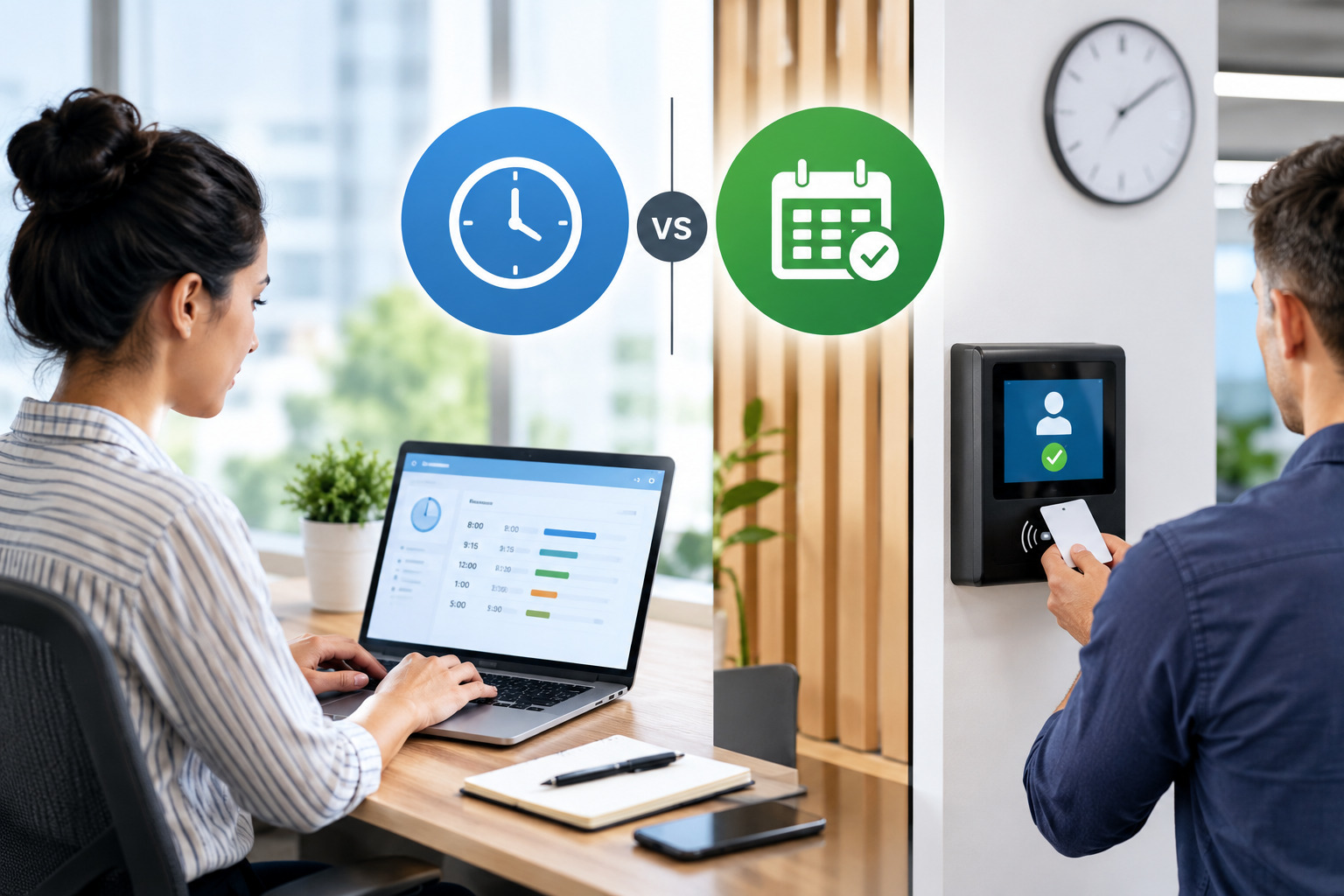
Timesheets vs. Attendance Tracking
Many people assume timesheets and attendance tracking are the same thing.
While related, they serve different purposes.
Attendance tracking focuses on:
- Presence
- Absences
- Arrival times
- Departure times
Timesheets provide more detailed information regarding:
- Hours worked
- Project allocation
- Task tracking
- Productivity reporting
Most workforce management systems combine attendance tracking and timesheet management into a single platform.
Timesheets vs. Time Tracking Software
Traditional timesheets rely on employees manually entering work hours.
Time tracking software automates much of the process.
Modern time tracking tools can:
- Capture work hours automatically
- Generate timesheets
- Monitor attendance
- Produce workforce reports
This improves accuracy while reducing administrative effort.
Organizations increasingly prefer automated time tracking solutions over manual methods.
How Timesheet Software Helps Modern Businesses
As workforce management becomes more complex, many organizations are moving toward digital timesheet systems.
Timesheet software helps businesses:
- Automate time tracking
- Improve payroll accuracy
- Reduce administrative work
- Monitor workforce activity
- Generate reports
- Improve compliance
Managers gain real-time visibility into workforce operations while employees benefit from simpler time reporting processes.
How Office1Solution Supports Timesheet Management
Office1Solution provides timesheet management software designed to help businesses track employee work hours, improve workforce visibility, and streamline operations.
The platform allows organizations to:
- Track employee time
- Manage attendance
- Monitor overtime
- Generate payroll-ready reports
- Improve workforce coordination
- Centralize workforce data
Whether managing office staff, field teams, remote employees, or shift-based workforces, Office1Solution helps simplify timesheet management and improve workforce efficiency.
Future of Timesheet Management
The future of timesheets is increasingly automated, mobile, and data-driven.
Organizations are adopting:
- Cloud-based timesheet software
- Mobile time tracking
- AI-powered workforce analytics
- Automated approvals
- Real-time workforce reporting
As businesses continue embracing digital transformation, timesheet management will become more accurate, efficient, and integrated with broader workforce management systems.
Frequently Asked Questions
What is a timesheet?
A timesheet is a record used to track employee work hours, attendance, overtime, and time spent on projects or tasks.
Why do employers use timesheets?
Employers use timesheets to process payroll, monitor attendance, manage labor costs, improve workforce visibility, and maintain compliance.
What is the difference between a timesheet and attendance tracking?
Attendance tracking records employee presence, while timesheets provide detailed information about hours worked and task allocation.
Are digital timesheets better than paper timesheets?
Yes. Digital timesheets improve accuracy, reduce administrative workload, and provide real-time workforce visibility.
How does timesheet software help businesses?
Timesheet software automates time tracking, improves payroll accuracy, simplifies reporting, and enhances workforce management.
Final Thoughts
Timesheets remain one of the most important workforce management tools for modern businesses. Accurate time tracking helps organizations improve payroll processing, manage labor costs, monitor productivity, and gain greater visibility into workforce operations.
As businesses continue embracing digital workforce management solutions, modern timesheet software is becoming essential for organizations seeking to improve efficiency, accuracy, and workforce coordination. By implementing effective timesheet management practices, employers can build stronger operational processes and support long-term business success.
Recent Posts
- Time and Attendance Software: Complete Guide for Employers
- Time and Attendance: What’s the Difference Between the Two?
- How to Reduce Timesheet Errors and Improve Payroll Accuracy
- Timesheet App for Employees: Features, Benefits & Best Practices

- Timesheet Software vs. Excel: Which Is Better for Businesses?
Stay Ahead. Simplify Workforce Management.
Empower your teams to work efficiently with a unified workforce platform built for clarity, control, and actionable insights across your organization.